Arthritis Complete Guide to Symptoms Causes Treatment and Prevention
Learn everything about arthritis, its types, symptoms, diagnosis, treatment options, and practical lifestyle tips for healthier joints.

Introduction
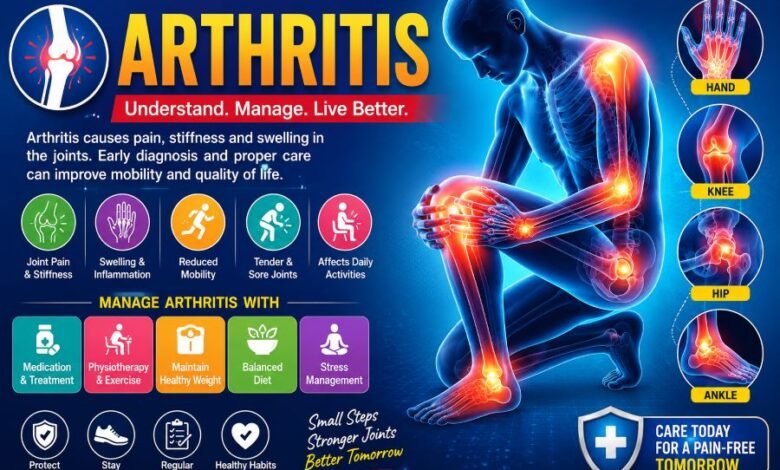
Arthritis is one of the most common health conditions affecting millions of people worldwide. It is not a single disease but a term used to describe more than 100 conditions that cause pain, stiffness, swelling, and reduced movement in the joints. While arthritis is more common in older adults, it can affect people of any age, including children. Early diagnosis and proper treatment can help manage symptoms and improve quality of life.
Table of Contents
ToggleQuick Facts About Arthritis
| Feature | Details |
|---|---|
| Condition | Arthritis |
| Common Symptoms | Joint pain, stiffness, swelling, reduced mobility |
| Most Common Types | Osteoarthritis, Rheumatoid Arthritis, Gout |
| Affected Areas | Knees, hips, hands, spine, shoulders, feet |
| Risk Factors | Age, obesity, injuries, genetics, autoimmune disorders |
| Diagnosis | Physical exam, blood tests, X-rays, MRI, ultrasound |
| Treatment | Medication, exercise, physical therapy, surgery (when needed) |
| Prevention | Healthy weight, regular exercise, joint protection |
What Is Arthritis?
Arthritis literally means inflammation of the joints. However, the term includes many different diseases that affect joints, surrounding tissues, and connective tissues. These conditions may develop gradually over time or appear suddenly depending on the type.
Healthy joints allow smooth movement because cartilage cushions the ends of bones. When cartilage breaks down or inflammation damages joint tissues, movement becomes painful and difficult.
Common Types of Arthritis
1. Osteoarthritis
Osteoarthritis is the most common form of arthritis. It develops when the protective cartilage covering the ends of bones gradually wears away due to aging, repetitive use, or previous injuries.
Commonly affected joints include:
- Knees
- Hips
- Hands
- Spine
- Shoulders
2. Rheumatoid Arthritis
Rheumatoid arthritis is an autoimmune disease. Instead of protecting the body, the immune system mistakenly attacks the lining of the joints, causing inflammation, pain, and long-term joint damage if untreated.
3. Gout
Gout occurs when uric acid crystals accumulate inside joints, leading to sudden episodes of severe pain, redness, and swelling. The big toe is most commonly affected.
4. Psoriatic Arthritis
Some people with psoriasis develop joint inflammation known as psoriatic arthritis. It can affect fingers, toes, knees, and the spine.
5. Juvenile Arthritis
Children can also develop arthritis. Juvenile arthritis includes several autoimmune conditions that affect children under the age of 16.
Arthritis Symptoms
Symptoms vary depending on the type of arthritis but commonly include:
- Joint pain
- Morning stiffness
- Swollen joints
- Warmth around joints
- Reduced range of motion
- Joint tenderness
- Difficulty walking
- Fatigue (especially in autoimmune arthritis)
- Weakness
- Clicking or grinding sensation
Some people experience mild symptoms, while others develop severe disability if treatment is delayed.
Causes of Arthritis
Different forms of arthritis have different causes.
Osteoarthritis
- Aging
- Joint injuries
- Repetitive stress
- Obesity
- Family history
Rheumatoid Arthritis
- Autoimmune disease
- Genetic factors
- Environmental triggers
Gout
- High uric acid levels
- Diet rich in purines
- Kidney problems
- Alcohol consumption
Other causes include infections, psoriasis, lupus, and metabolic disorders.
Risk Factors
Several factors increase the likelihood of developing arthritis:
- Growing older
- Family history
- Being overweight
- Previous joint injuries
- Smoking
- Autoimmune disorders
- Repetitive physical work
- Certain infections
Women are more likely to develop rheumatoid arthritis, while gout is more common in men.
Which Joints Are Commonly Affected?
Arthritis frequently affects:
- Knees
- Hips
- Hands
- Fingers
- Feet
- Ankles
- Shoulders
- Neck
- Lower back
- Spine
Weight-bearing joints usually experience symptoms first.
How Arthritis Is Diagnosed
Doctors diagnose arthritis using several methods:
Medical History
The doctor asks about:
- Pain location
- Duration
- Family history
- Previous injuries
- Daily activities
Physical Examination
The affected joints are checked for:
- Swelling
- Tenderness
- Warmth
- Range of movement
Laboratory Tests
Blood tests may include:
- Rheumatoid factor
- Anti-CCP antibodies
- ESR
- CRP
- Uric acid levels
Imaging Tests
Doctors may recommend:
- X-rays
- MRI
- CT scan
- Ultrasound
These tests help identify joint damage and determine the type of arthritis.
Treatment Options
Although there is no universal cure for arthritis, treatment can successfully reduce pain and improve mobility.
Medications
Doctors may prescribe:
- Pain relievers
- NSAIDs
- Corticosteroids
- Disease-modifying antirheumatic drugs (DMARDs)
- Biologic medicines
- Uric acid-lowering medicines for gout
Physical Therapy
Physical therapy helps:
- Strengthen muscles
- Improve flexibility
- Increase joint stability
- Reduce pain
Exercise
Low-impact activities are recommended, including:
- Walking
- Swimming
- Cycling
- Yoga
- Stretching
Weight Management
Losing excess weight reduces stress on the knees, hips, and ankles.
Surgery
When severe joint damage occurs, surgery may include:
- Joint replacement
- Joint repair
- Joint fusion
Foods That May Help
Many people benefit from an anti-inflammatory eating pattern.
Recommended foods include:
- Fatty fish
- Olive oil
- Leafy vegetables
- Nuts
- Berries
- Whole grains
- Beans
- Fresh fruits
Limit:
- Sugary drinks
- Processed foods
- Excess salt
- Saturated fats
Can Arthritis Be Prevented?
Not every form of arthritis can be prevented, but healthy habits reduce the risk.
Helpful habits include:
- Stay physically active
- Maintain a healthy weight
- Avoid smoking
- Protect joints during sports
- Eat a balanced diet
- Treat joint injuries early
- Have regular medical checkups
Living With Arthritis
Many people continue to live active, productive lives after diagnosis. Managing arthritis often requires a combination of medication, exercise, healthy eating, stress management, and routine follow-up with healthcare professionals.
Using supportive footwear, ergonomic furniture, and assistive devices can also reduce daily discomfort.
When Should You See a Doctor?
Consult a healthcare provider if you experience:
- Joint pain lasting several weeks
- Severe swelling
- Morning stiffness lasting over 30 minutes
- Fever with joint pain
- Sudden inability to move a joint
- Redness and warmth around joints
Early treatment can help prevent permanent joint damage.
Frequently Asked Questions
What is arthritis?
Arthritis is a group of conditions that cause inflammation, pain, stiffness, and swelling in one or more joints.
Is arthritis curable?
There is no cure for most types, but treatments can effectively control symptoms and slow progression.
What is the most common type of arthritis?
Osteoarthritis is the most common type worldwide.
Can young people develop arthritis?
Yes. Arthritis can affect children, teenagers, and adults of all ages.
Does exercise help arthritis?
Yes. Regular low-impact exercise improves joint flexibility and reduces pain.
Which foods should people with arthritis avoid?
Limit processed foods, sugary beverages, and excessive saturated fats.
Is arthritis hereditary?
Some forms, especially rheumatoid arthritis, have a genetic component.
When is surgery needed?
Surgery may be recommended when severe joint damage causes persistent pain and loss of function despite other treatments.
Conclusion
Arthritis is a broad term covering many joint disorders, with osteoarthritis and rheumatoid arthritis being the most common. While symptoms such as pain, swelling, and stiffness can affect daily life, early diagnosis and personalized treatment plans can significantly improve mobility and quality of life. Healthy lifestyle choices, regular exercise, weight management, and appropriate medical care remain the foundation of effective arthritis management.