Caquis Persimon Explained Sweet Spanish Fruit With Amazing Benefits
Discover what Caquis Persimon is, its health benefits, nutrition, uses, and how to enjoy this delicious Spanish fruit.

Introduction
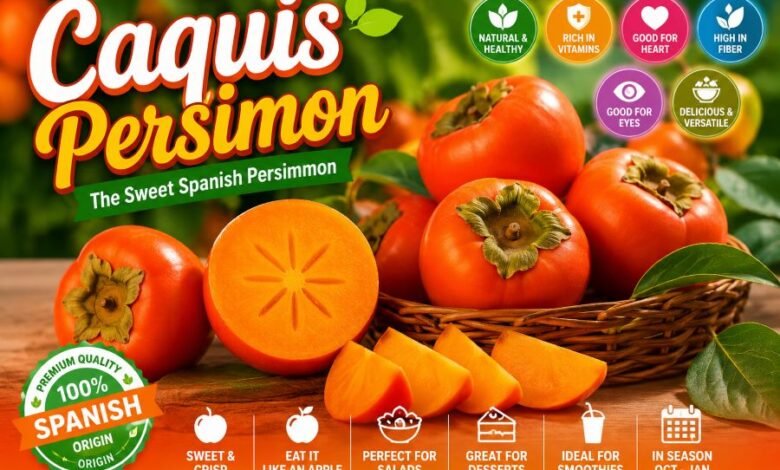
Caquis Persimon is a premium type of persimmon that has become increasingly popular for its naturally sweet taste, crisp texture, and impressive nutritional value. While “caqui” is the Spanish word for persimmon, Persimon® is a registered trademark used for specially treated Rojo Brillante persimmons grown in Spain’s Ribera del Xúquer region. Unlike traditional astringent persimmons, Caquis Persimon can be eaten while still firm, much like an apple.
Table of Contents
ToggleQuick Facts About Caquis Persimon
| Feature | Details |
|---|---|
| Common Name | Caquis Persimon |
| Fruit Type | Persimmon (Kaki) |
| Scientific Name | Diospyros kaki |
| Origin | Spain (Valencia Region) |
| Trademark | Persimon® |
| Main Variety | Rojo Brillante |
| Taste | Sweet, mild, honey-like |
| Texture | Crisp and firm |
| Harvest Season | October to January |
| Best Eaten | Fresh, salads, desserts, smoothies |
What Is Caquis Persimon?
Caquis Persimon is a high-quality Spanish persimmon known for its bright orange color, sweet flavor, and crunchy texture. It comes from the Rojo Brillante variety and undergoes a natural de-astringency process, allowing consumers to enjoy the fruit before it becomes soft.
Unlike traditional persimmons that must fully ripen before eating, Caquis Persimon remains firm and crisp while still offering excellent sweetness. This unique characteristic has made it one of Europe’s most sought-after seasonal fruits.
Origin and History
The Persimon® brand was developed in Spain’s Ribera del Xúquer region near Valencia. The Rojo Brillante variety naturally originated in the 1950s, while improvements in post-harvest treatment during the late 1990s made it possible to remove astringency without affecting firmness.
Today, Persimon® carries Protected Designation of Origin (PDO) status, ensuring quality, traceability, and authentic regional production.
Nutritional Value
Caquis Persimon is packed with essential nutrients that support overall health.
Rich in Dietary Fiber
The fruit contains plenty of dietary fiber, helping improve digestion and supporting gut health.
Excellent Source of Vitamins
It provides Vitamin A and Vitamin C, both important for immune function, healthy skin, and vision.
Natural Antioxidants
Carotenoids and flavonoids found in Caquis Persimon help fight oxidative stress and protect body cells from damage.
Health Benefits of Caquis Persimon
Supports Heart Health
Fiber and antioxidants may contribute to healthy cholesterol levels and cardiovascular wellness.
Boosts Immunity
Vitamin C strengthens the immune system and helps the body fight infections.
Promotes Healthy Digestion
Its fiber content encourages regular digestion while supporting beneficial gut bacteria.
Good for Eye Health
Vitamin A and carotenoids contribute to maintaining healthy eyesight.
Naturally Low in Fat
Caquis Persimon contains very little fat, making it suitable for balanced diets.
Taste and Texture
One of the biggest reasons for its popularity is its unique eating experience.
Its flavor combines notes of honey, vanilla, and apricot, while its texture remains crisp, juicy, and refreshing. Many people compare eating it to biting into a sweet apple.
How to Eat Caquis Persimon
There are many delicious ways to enjoy this fruit:
- Eat it fresh with the skin on
- Slice into fruit salads
- Add to green salads
- Blend into smoothies
- Use in cakes and desserts
- Pair with cheese boards
- Add to yogurt or oatmeal
- Make homemade jam
Since it contains no large seeds and has edible skin, preparation is quick and simple.
How to Choose the Best Fruit
When shopping for Caquis Persimon:
- Choose bright orange fruits.
- The skin should be smooth and shiny.
- Avoid fruits with deep bruises.
- Select firm fruit if you prefer a crisp texture.
Storage Tips
Keep Caquis Persimon at room temperature if you plan to eat it soon.
For longer storage, refrigerate it to maintain freshness. Handle gently to avoid bruising.
Difference Between Caquis Persimon and Regular Persimmons
| Feature | Caquis Persimon | Traditional Persimmon |
|---|---|---|
| Texture | Firm and crisp | Soft when ripe |
| Astringency | Removed before sale | Present until fully ripe |
| Eating Style | Like an apple | Spoon or peeled when soft |
| Taste | Sweet and mild | Sweet only after ripening |
Culinary Uses
Professional chefs and home cooks enjoy Caquis Persimon because it works well in both sweet and savory dishes.
Popular recipes include:
- Fresh fruit bowls
- Autumn salads
- Cheesecakes
- Tarts
- Ice cream toppings
- Smoothies
- Homemade jams
- Roasted vegetable dishes
Why Is Caquis Persimon Popular?
Several factors contribute to its growing popularity:
- Naturally sweet flavor
- Crisp texture
- Easy to eat
- Rich nutritional profile
- Attractive appearance
- Premium Spanish quality
- Versatile in recipes
Frequently Asked Questions
Is Caquis Persimon the same as a regular persimmon?
It is a specially treated Rojo Brillante persimmon sold under the Persimon® trademark.
Can you eat the skin?
Yes, the skin is edible and commonly eaten.
Does it contain seeds?
Most fruits contain few or no noticeable seeds.
When is it available?
Typically from October through January.
Is it healthy?
Yes, it contains fiber, vitamins, and antioxidants.
Can children eat Caquis Persimon?
Yes, it is generally suitable as part of a balanced diet.
Can I refrigerate it?
Yes, refrigeration helps extend freshness.
Why is it crunchy?
Its astringency is removed while keeping the flesh firm and crisp.
Conclusion
Caquis Persimon is a premium Spanish fruit that combines exceptional taste, convenience, and nutrition. Its crisp texture, naturally sweet flavor, and versatility make it an excellent addition to healthy diets. Whether eaten fresh, added to salads, or used in desserts, Caquis Persimon offers a delicious seasonal experience that continues to gain popularity worldwide.