John Charmley Legacy and Controversial Historical Influence Examined
How a British Academic Challenged History and Reshaped Debate

Introduction
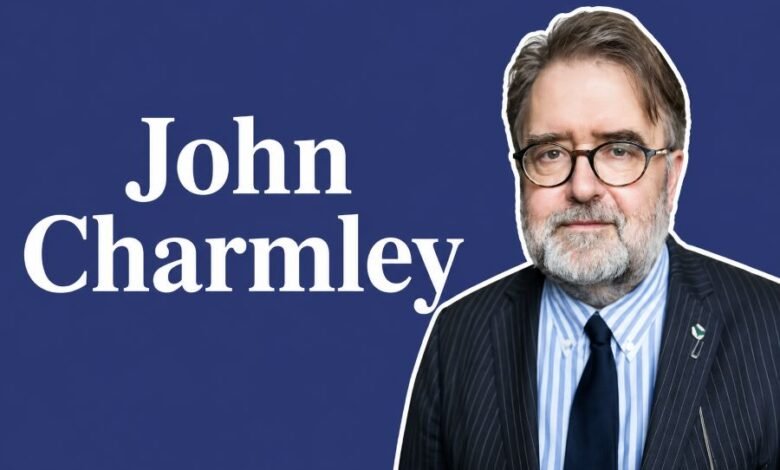
John Charmley remains one of the most influential and debated historians in modern British scholarship. Known for his revisionist interpretations of twentieth-century British history, he challenged many widely accepted views about political leadership, foreign policy, and the legacy of wartime Britain. While many historians praised his willingness to question established narratives, others criticized his conclusions, particularly regarding Winston Churchill and Neville Chamberlain.
As a respected British academic, author, and university leader, John Charmley built a reputation for intellectual independence and rigorous historical analysis. His books sparked discussion far beyond university classrooms and attracted attention from scholars, journalists, politicians, and history enthusiasts alike.
Understanding the life and work of John Charmley provides valuable insight into modern British historical scholarship. His career demonstrates how historians can influence public understanding of the past while generating important debates about national identity, leadership, and political decision-making.
Quick Bio
| Field | Details |
|---|---|
| Full Name | John Denis Charmley |
| Known As | John Charmley |
| Date of Birth | 9 November 1955 |
| Birthplace | Birkenhead, England |
| Nationality | British |
| Profession | Historian, Author, British Academic |
| Education | Pembroke College, Oxford |
| Degree | BA and DPhil in History |
| Religion | Roman Catholic |
| Children | Three Sons |
| Death Date | 12 May 2025 |
| Age at Death | 69 Years |
Early Life and Family Background
Childhood in Birkenhead
John Charmley was born on 9 November 1955 in Birkenhead, England. He grew up in a working-class household that shaped many of his views about society, politics, and education. Unlike many future historians, he was not raised in an environment filled with books and academic discussion.
His father, Jack Charmley, worked on the docks and was actively involved in trade union activities. His mother, Doris “Dot” Charmley, managed the family home before later working as a barmaid. Their dedication and hard work provided an important foundation for his future achievements.
Interest in History
From an early age, John Charmley developed a strong interest in reading and history. A childhood fascination with literature encouraged him to explore historical events and political figures. This passion eventually became the driving force behind his academic career.
His intellectual ability was recognized during his school years, helping him pursue higher education and eventually gain admission to one of Britain’s most respected universities.
Education and Academic Development
Oxford University Experience
John Charmley attended Pembroke College, Oxford, where he studied history. During his time at Oxford, he demonstrated exceptional academic ability and developed a deep interest in modern British political history.
He earned a Bachelor of Arts degree before continuing advanced research. His doctoral studies focused on Britain’s relationship with Charles de Gaulle and the Free French movement during World War II.
Building Historical Expertise
The years spent at Oxford helped shape Charmley’s future career. His research interests expanded into diplomacy, foreign policy, political leadership, and Conservative Party history.
These academic foundations later enabled him to become one of the most recognized British academic historians of his generation.
Career as a British Academic
University of East Anglia
John Charmley began his professional career in 1979 when he joined the University of East Anglia as a lecturer in history. Over the following decades, he established himself as an influential teacher, researcher, and academic leader.
His responsibilities expanded significantly as he progressed through the university system. He eventually became Professor of Modern History and held several senior leadership positions.
Throughout his career at the University of East Anglia, he contributed to curriculum development, student education, and scholarly research.
Leadership Roles
Beyond teaching and writing, Charmley served in several administrative positions. His leadership abilities earned him appointments as Head of the School of History, Head of the School of Music, and Head of the Institute for Interdisciplinary Humanities.
Later, he joined St Mary’s University, Twickenham, where he served as Pro-Vice-Chancellor and Provost. In these roles, he worked to improve educational opportunities and expand access to higher education.
Major Publications and Historical Works
Duff Cooper
One of John Charmley’s earliest notable books was Duff Cooper, published in 1986. The biography examined the life and career of the British politician and diplomat.
The work established his reputation as a serious historian capable of producing detailed and thoughtful historical research.
Chamberlain and the Lost Peace
Published in 1989, this book became one of Charmley’s most significant works. He argued that Neville Chamberlain’s policy of appeasement should be evaluated within the political and military realities of the time.
The book challenged conventional historical interpretations and generated extensive discussion among scholars.
Churchill: The End of Glory
This 1993 publication became John Charmley’s most famous and controversial book. He argued that although Winston Churchill played a vital role in defeating Nazi Germany, some wartime decisions contributed to Britain’s long-term decline as a global power.
The book sparked strong reactions from historians, politicians, and readers. Supporters praised its originality, while critics disagreed with many of its conclusions.
Historical Views and Controversies
Revisionist History
John Charmley became closely associated with revisionist history. Revisionist historians seek to re-examine accepted interpretations and explore alternative perspectives on historical events.
His work encouraged readers to reconsider assumptions about political leaders and foreign policy decisions.
Rather than accepting established narratives, Charmley believed historical evidence should be continually reassessed.
Debate Over Churchill
The strongest controversy surrounding John Charmley involved his interpretation of Winston Churchill’s legacy.
Many historians viewed Churchill as one of Britain’s greatest leaders. Charmley acknowledged Churchill’s wartime achievements but argued that some strategic decisions weakened Britain’s future global position.
This perspective attracted criticism but also stimulated valuable scholarly discussion.
Personal Life
Marriages and Family
John Charmley married three times during his life.
His first marriage was to Ann Dorothea Bartlett in 1977. The couple had three sons before eventually divorcing in 1992.
He later married Lorraine Fegan, and following that relationship, married Rachel Heap in 2004. Through his third marriage, he became stepfather to two daughters.
Religious Journey
Religion played an important role in Charmley’s personal development.
Over the years, he explored several Christian traditions before ultimately embracing Roman Catholicism. His faith remained an important aspect of his life and personal identity.
Career Timeline
| Year | Career Milestone |
|---|---|
| 1955 | Born in Birkenhead, England |
| 1977 | Graduated from Oxford University |
| 1979 | Joined University of East Anglia |
| 1982 | Completed Doctorate in History |
| 1986 | Published Duff Cooper |
| 1989 | Published Chamberlain and the Lost Peace |
| 1993 | Published Churchill: The End of Glory |
| 1995 | Published Churchill’s Grand Alliance |
| 1996 | Published A History of Conservative Politics Since 1830 |
| 2016 | Joined St Mary’s University Leadership |
| 2021 | Retired from Senior Administrative Role |
| 2025 | Passed Away at Age 69 |
Influence on British Historical Scholarship
John Charmley’s impact on historical scholarship extended far beyond his published books.
As a British academic, he influenced students, researchers, and fellow historians through teaching, mentoring, and public engagement. His willingness to challenge accepted wisdom encouraged others to approach historical questions with greater independence.
Even critics acknowledged his ability to stimulate meaningful debate and bring historical issues into public discussion.
His scholarship demonstrated that history remains a dynamic field where evidence and interpretation continue to evolve.
Legacy and Lasting Importance
The legacy of John Charmley rests on his determination to challenge historical orthodoxy.
His books continue to be discussed in universities and among historians interested in British political history. Whether readers agree or disagree with his conclusions, his work remains relevant because it raises important questions about leadership, national strategy, and historical judgment.
His contributions also highlight the value of intellectual courage. By presenting arguments that differed from mainstream opinion, he expanded the boundaries of historical debate.
Today, John Charmley is remembered as a distinguished historian, influential author, and respected British academic whose work continues to shape conversations about Britain’s past.
Conclusion
John Charmley occupied a unique place within modern British historical scholarship. Through decades of teaching, research, and writing, he challenged accepted narratives and encouraged deeper examination of political leadership and foreign policy.
His career combined academic excellence with intellectual independence, making him one of the most recognized revisionist historians of his generation. Although some of his conclusions remain controversial, his influence on historical debate is undeniable.
As a historian, author, and British academic, John Charmley left a lasting legacy that continues to inspire discussion, research, and critical thinking about Britain’s history.
FAQ
Who was John Charmley?
John Charmley was a British historian, author, and academic known for revisionist interpretations of British history.
What was John Charmley’s full name?
His full name was John Denis Charmley.
When was John Charmley born?
He was born on 9 November 1955.
Where was John Charmley born?
He was born in Birkenhead, England.
What nationality was John Charmley?
He was British.
Who were John Charmley’s parents?
His parents were Jack Charmley and Doris “Dot” Charmley.
Did John Charmley have children?
Yes, he had three sons.
What religion did John Charmley follow?
He was a Roman Catholic later in life.
What university did John Charmley attend?
He studied at Pembroke College, Oxford.
What was John Charmley famous for?
He was famous for his revisionist historical writings, especially on Churchill and Chamberlain.
What was John Charmley’s most famous book?
Churchill: The End of Glory is generally considered his most famous work.
When did John Charmley die?
He died on 12 May 2025 at the age of 69.